
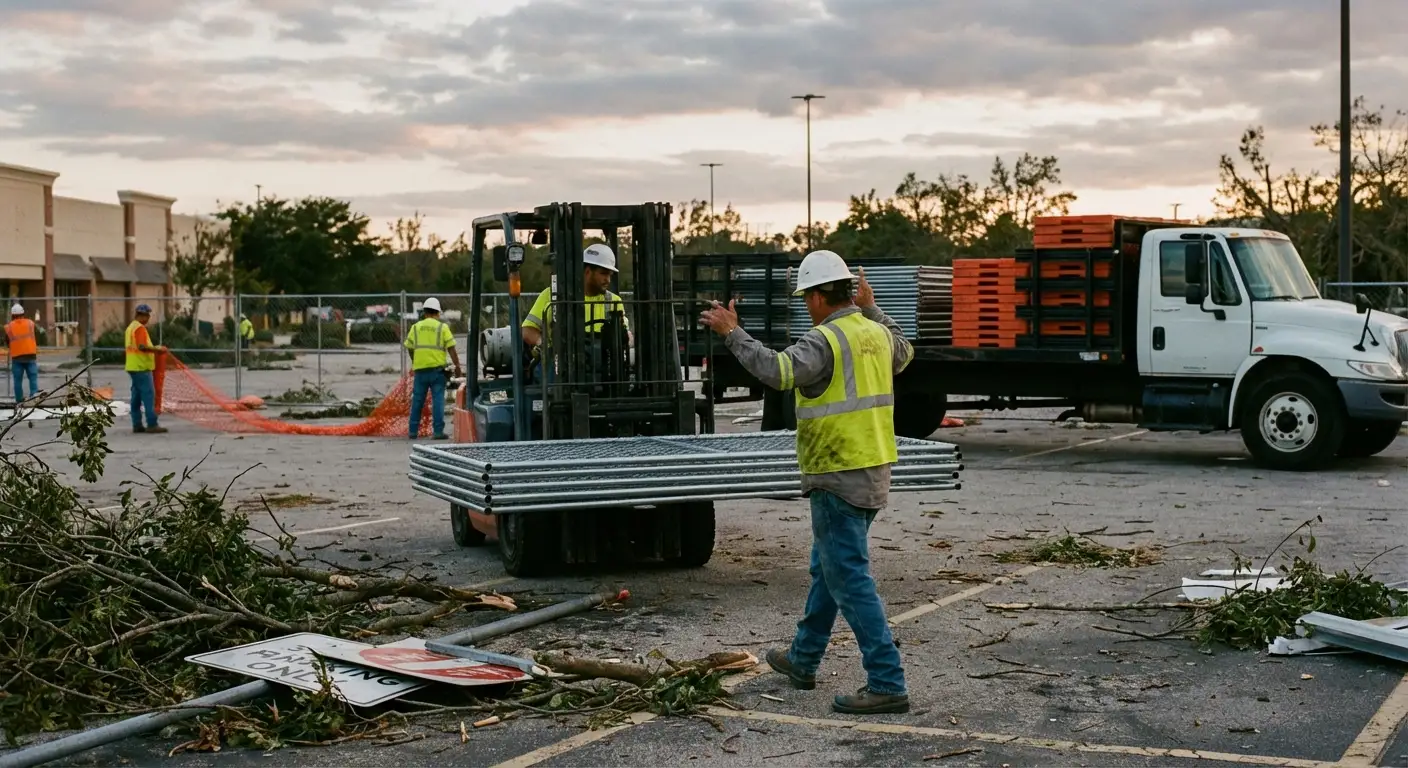
Emergency Restoration Fencing in Youngstown’s Challenging Conditions
After the massive snowmelt back in '05, I saw firsthand how fast erosion around the Mahoning River could turn a site into a hazard. When we drop fencing in Smokey Hollow or Lower Gibson, we don’t just throw up panels; we assess the flood zone risks and use concrete steel bases to keep everything locked down. The 1920-1950 buildings here add complexity, so our crew relies on interlocking hooks and wind load resistance features to stand up to gusts on those 16 hot days over 90F. We also roll out dust control mesh to keep cleanup manageable, especially near Mill Creek Park. For quick access, wheel-assisted gates make a difference. If you want to know more about how we prevent site theft or keep fences from blowing over, check out our guides on site theft prevention and fence blow over prevention.
Site Security Checklist
- Assess site hazards and secure perimeter within 2 hours
- Deploy interlocking hooks and wind load resistance fencing
- Use concrete steel bases for stability in flood-prone zones
- Install wheel-assisted gates for quick access control
- Implement dust control mesh to minimize airborne debris
- Consult site theft prevention strategies during restoration
- Coordinate with crews experienced in 1920s-1950s building sites
- Adapt fencing layout for modular reconfiguration as site evolves

