
Youngstown Root Zone Calculation for TPZ Fencing: Compliance Guide
In Youngstown, OH, proper root zone calculation is crucial for TPZ fencing compliance, especially in areas like Downtown and Lower Gibson with their historic buildings. Steel Valley Fence Rentals provides precise CRZ measurements considering Youngstown's 15.4in annual precipitation and flood zones. Our local expertise ensures your fencing project near landmarks like Mahoning County Courthouse meets all municipal requirements without damaging protected root systems.
Calculating Root Protection Zones for Downtown Youngstown Projects
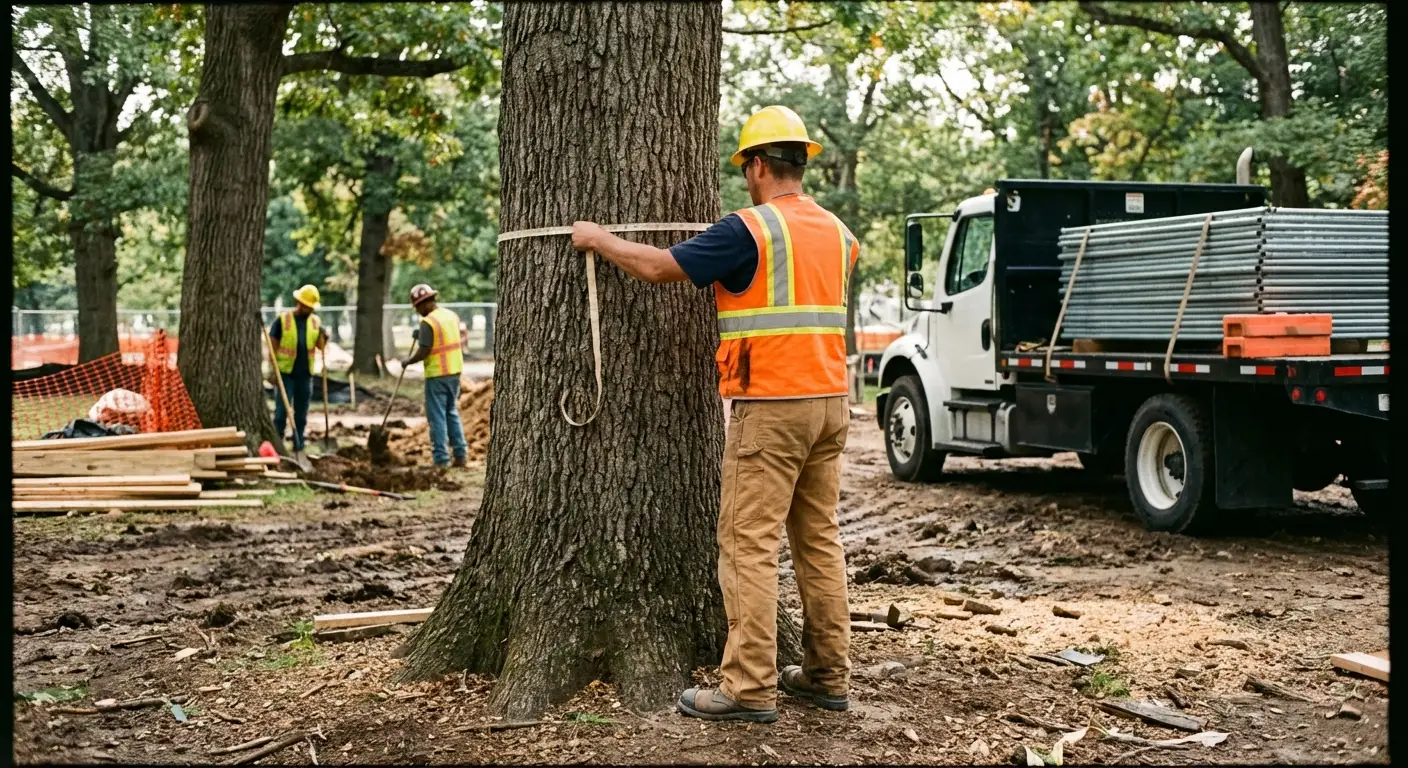
After that brutal 2005 snowmelt eroded half the hillside near Mahoning Commons, we learned the hard way how tree roots stabilize soil. Now when we install post-driven fences in Downtown Youngstown, we calculate Tree Protection Zones (TPZ) by trunk diameter - typically 1 foot of radius per inch of DBH. Our crew carries diameter tapes and always checks for surface roots before driving posts. For the heritage oaks near Lower Gibson, we'll often extend the TPZ another 20% as insurance against Youngstown's freeze-thaw cycles.
Calculation Steps
- Measure trunk diameter at breast height (DBH) for accurate root zone calculation
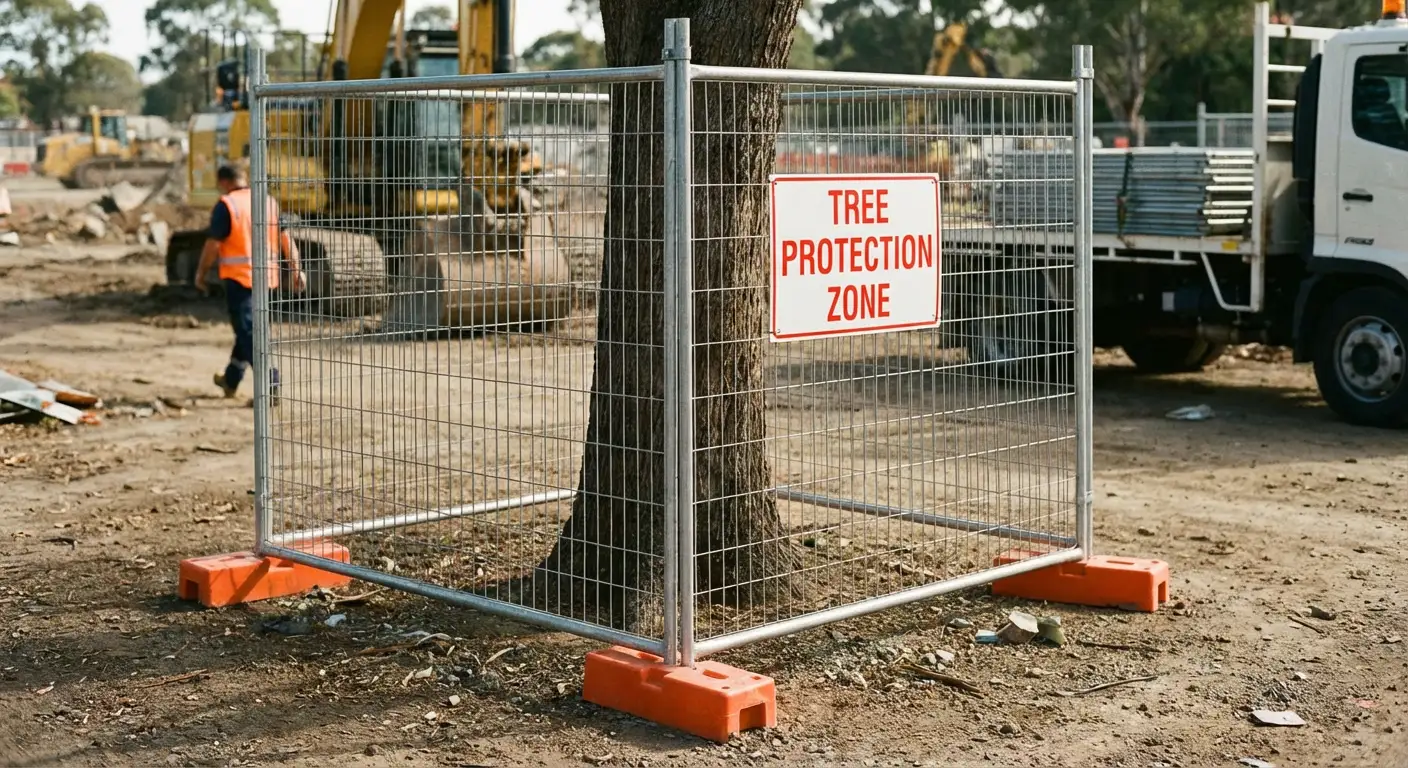
- Mark TPZ boundary with high-visibility TPZ rental hardware before any excavation
- Consult local tree protection ordinances for Youngstown's specific requirements
- Use non-invasive concrete-steel bases to avoid root damage during fence installation
- Document all protection measures with photos for compliance records
TPZ Calculation Guide|Trunk Diameter (inches)|Minimum Protection Radius (feet)|Special Considerations
6-12|6-12|Double radius for historic/landmark trees
12-24|12-24|Use zero-trip hazard fencing in high-traffic areas
24+|24+|Consult arborist for root mapping
Calculating TPZ Boundaries for Youngstown Field Sites
Field crews in Lower Gibson must establish the Tree Protection Zone (TPZ) before installing any tree protection zones. Calculating this radius prevents soil compaction and root severance near landmarks like Fellows Riverside Gardens. Workers use the trunk diameter to determine the offset, ensuring compliance with tree protection ordinances. Failure to respect these boundaries leads to root death during site grading. Post-driven fence installation must stay outside the drip line to maintain soil integrity.
Key Terminology
- Critical Root Zone
- The immediate area surrounding a tree trunk where root density is highest.
- TPZ Delineation
- Marking the physical boundaries of tree protection zones on job sites.
- Soil Compaction
- Compression of soil particles reducing air and water availability for roots.
- Arborist Report
- Professional assessment used to determine exact root zone radius for fencing.
- Permeable Barrier
- Fencing materials that allow water infiltration into the protected root zone.
- Tree Protection Ordinance
- Local Youngstown regulations governing the preservation of urban canopy during construction.
In Simple Terms
TPZ fencing requires calculating a radius around a tree trunk to prevent root damage from heavy equipment and soil compaction.
TPZ Fencing Specifications for Youngstown Properties
Compliance guidelines for root protection fencing near Fellows Riverside Gardens.
| Minimum TPZ Radius | 5-8 feet from tree trunk |
|---|---|
| Soil Type Adjustment | Clay soils require 15% larger radius |
| Fence Post Depth | 24-36 inches for stability |
| Material Requirements | Galvanized steel posts ($45-$65 each) |
| Flood Zone Considerations | Anchor bases required in Lower Gibson |
| Permit Fees | $75-$120 for residential zones |
| Signage Interval | Every 30 linear feet |
Accurate Root Zone Calculation for TPZ Fencing Compliance
Protect Youngstown construction sites with precise temporary protective zone measurements.
Common Mistakes in Root Zone Calculation for TPZ Fencing
Root zone calculation is critical for TPZ fencing compliance in Youngstown. Mistakes here risk tree health and violate local ordinances, especially around Oak Hill and Smokey Hollow. Avoid these pitfalls for solid, code-compliant setups.
Ignoring Accurate Tree Species and Size Data
Underestimating root zones by not factoring in species-specific root spread leads to damage and fence failure, especially in residential areas like Oak Hill with mature trees.
Measure tree diameter and consult species root spread charts to calculate precise root zones before fence placement.
Neglecting Soil and Climate Conditions
Failing to consider Youngstown’s freeze-thaw cycles and soil moisture can cause root damage and fence instability, risking erosion near flood-prone zones.
Account for local soil types and climate effects, adjusting root zone buffers accordingly to protect trees and fence integrity.
Overlooking Underground Utilities and Structures
Installing fencing without proper underground surveys disrupts irrigation and foundation systems typical in 1920–1950 buildings, leading to costly repairs.
Conduct thorough underground utility scans to avoid interference with existing infrastructure and comply with city regulations.
Misapplying Temporary Fence Base Placement
Placing heavy concrete steel bases too close to roots compacts soil, harming tree health and violating TPZ fencing standards in Smokey Hollow’s residential zones.
Use modular steel bases positioned outside calculated root zones to prevent soil compaction and root damage.
Failing to Update Calculations for Site Changes
Site modifications like excavation or grading after initial fencing setup can expose roots and breach compliance, especially near cultural landmarks like Lanterman’s Mill.
Reassess root zones after any site changes and adjust fencing to maintain protection and meet compliance requirements.
Root Zone Calculation for TPZ Fencing: Compliance Guide
When things need to be locked down, fast and right, we're on it. Our approach to root zone calculation blends on-the-ground experience from Youngstown’s variable terrain with certified engineering judgment. We don’t just meet code—we anticipate how frost heave, soil saturation, and urban tree roots interact over time. Every TPZ fence we deploy reflects lessons learned since 2005, especially after that major snowmelt exposed how quickly unstable bases compromise entire sites.
-
Soil Stability First
Root zone calculations start with understanding Youngstown’s clay-loam soil composition and freeze-thaw cycles. We assess compaction levels and moisture retention to ensure fence bases won’t shift during spring thaws or heavy rain events common near the Mahoning River.In PracticeAt a Downtown site near the Mahoning County Courthouse, we used concrete-steel bases after calculating a 22-inch root zone depth to counteract seasonal heave.
-
Climate-Adjusted Embedment
With 119 freeze days and 15.4 inches of annual precipitation, standard embedment depths don’t cut it here. We adjust root zone depth based on localized frost penetration and drainage patterns, especially in older neighborhoods like Lower Gibson built on 1920s–1950s fill.In PracticeIn Lower Gibson, we increased post embedment by 8 inches beyond code minimums to handle saturated soils during late-winter melt-offs.
-
TPZ-Specific Load Mapping
Tree Protection Zones require non-invasive anchoring that won’t damage root systems. We map critical root zones per ISA standards, then calculate fence placement and base weight to avoid compaction within the drip line while maintaining OSHA wind-load compliance.In PracticeFor a tree protection zone in Mahoning Commons, we deployed offset bases with zero-trip-hazard design to preserve surface roots.
-
Dynamic Reassessment
Root zone integrity isn’t static—especially after heavy rain or rapid snowmelt. Our crews verify base stability within 24 hours of significant weather events, using real-time site conditions to adjust bracing or add counterweights if needed.In PracticeFollowing a 2.1-inch rainfall event in Downtown, we reinforced post-driven fence bases with wind-load-resistant cross-bracing to maintain TPZ compliance.
Steel Valley Fence Rentals ensures every temporary perimeter in Youngstown—from Downtown institutional sites to residential blocks in Lower Gibson and Mahoning Commons—meets structural and environmental compliance through precise, climate-informed root zone planning.
Root Zone Calculation for TPZ Fencing: Compliance Guide — Part 2
Guidance on calculating tree root zones for temporary protective fencing in Youngstown, OH, aligned with local urban forestry and safety standards.
What defines the root zone for TPZ fencing in Youngstown?
The root zone is the ground area within 18 inches of a tree trunk where fencing installation must avoid root damage per Youngstown Urban Forestry guidelines.
How does soil type in Smokey Hollow affect root zone calculations?
Smokey Hollow’s clay-loam soil retains moisture longer, requiring wider buffer zones around tree roots to prevent compaction during TPZ fence placement.
Are root zone rules different near Stambaugh Stadium?
Temporary fencing near Stambaugh Stadium follows the same TPZ root zone standards but requires additional clearance during event setup per city event permits.
Does Downtown Youngstown have special TPZ fencing restrictions?
Downtown installations must account for older infrastructure and limited green space, often reducing allowable fence proximity to protected root zones under city code.
How does winter frost in Lower Gibson impact root zone measurements?
With 119 days below 32°F, frozen ground in Lower Gibson can mask root locations; manual probing is required before TPZ fence post placement.
Is OSHA involved in TPZ root zone compliance?
OSHA does not regulate root zones directly, but trenching near roots in TPZ fencing must follow OSHA 1926 Subpart P for worker safety in Youngstown.
Root Zone Calculation for TPZ Fencing Compliance Guide
Ensure TPZ fencing installations meet local and OSHA standards with precise root zone calculations in Youngstown, OH.
Trusted by Youngstown contractors for accurate fencing calculations.